

Universal Horror Month: The Old Dark House (1932) (Part 1)
Fine stuff, but it'll rot.


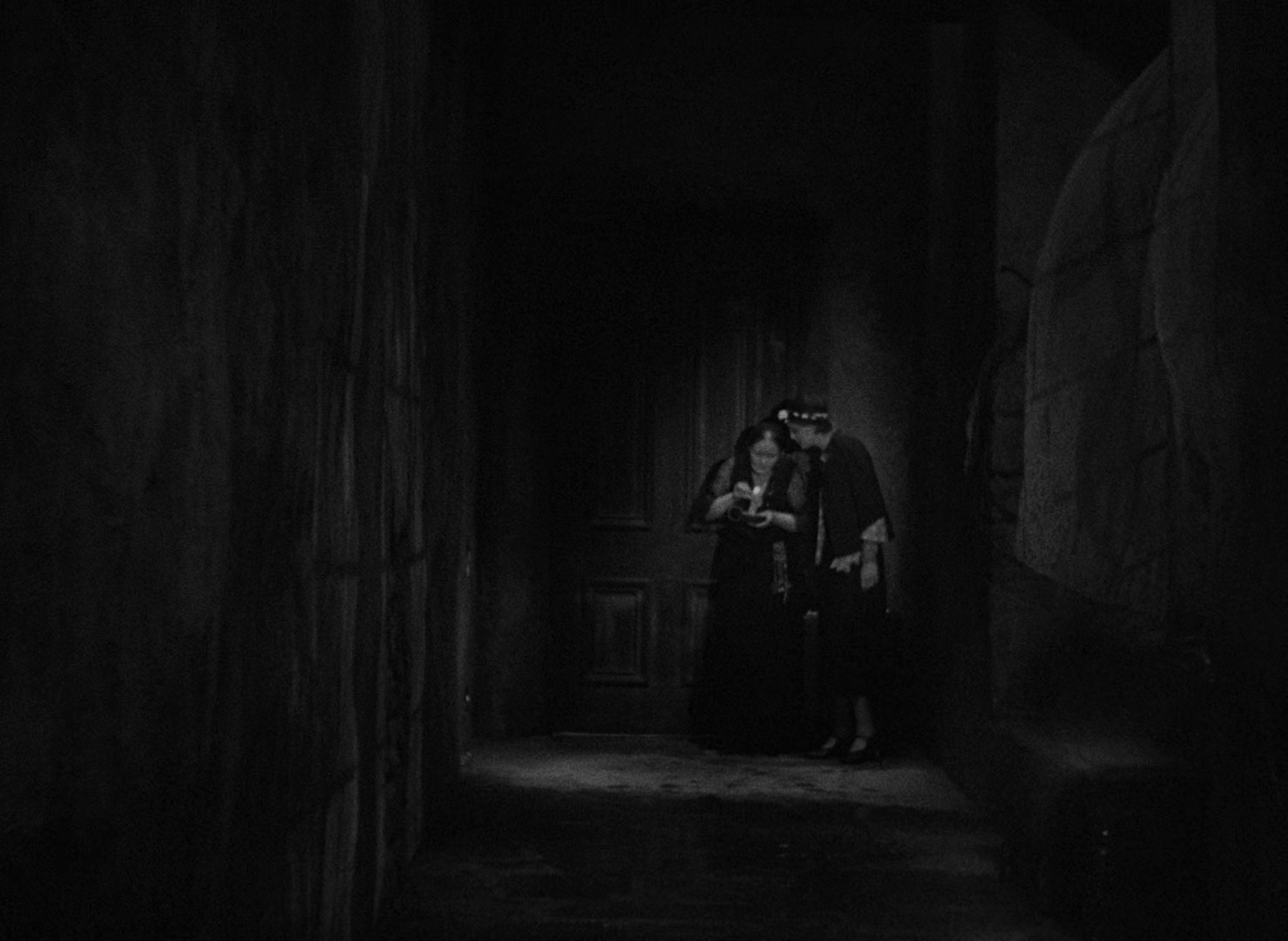
Five people take refuge in a creepy house during a raging storm. But are they truly safe? Or does the family inhabiting the house pose a bigger threat to them than the weather outside?
Welcome to the final post for Universal Horror Month!
The Old Dark House is completely different from the other films I watched for this project. Rather than monsters, it involves a creepy house, a weird family and some themes that are quite ahead of its time. Suffice it to say, I totally enjoyed this film. But I’ll expand on that later.
As anyone who has been following Universal Horror Month should know, joining me for this review is the awesome Harry Evans! In fact, it was his idea to collaborate on this film and I’m so glad he suggested it.
In this first part, Harry and I will discuss the film’s themes, characters and direction.
So let’s get into it!
Themes (Jamie)
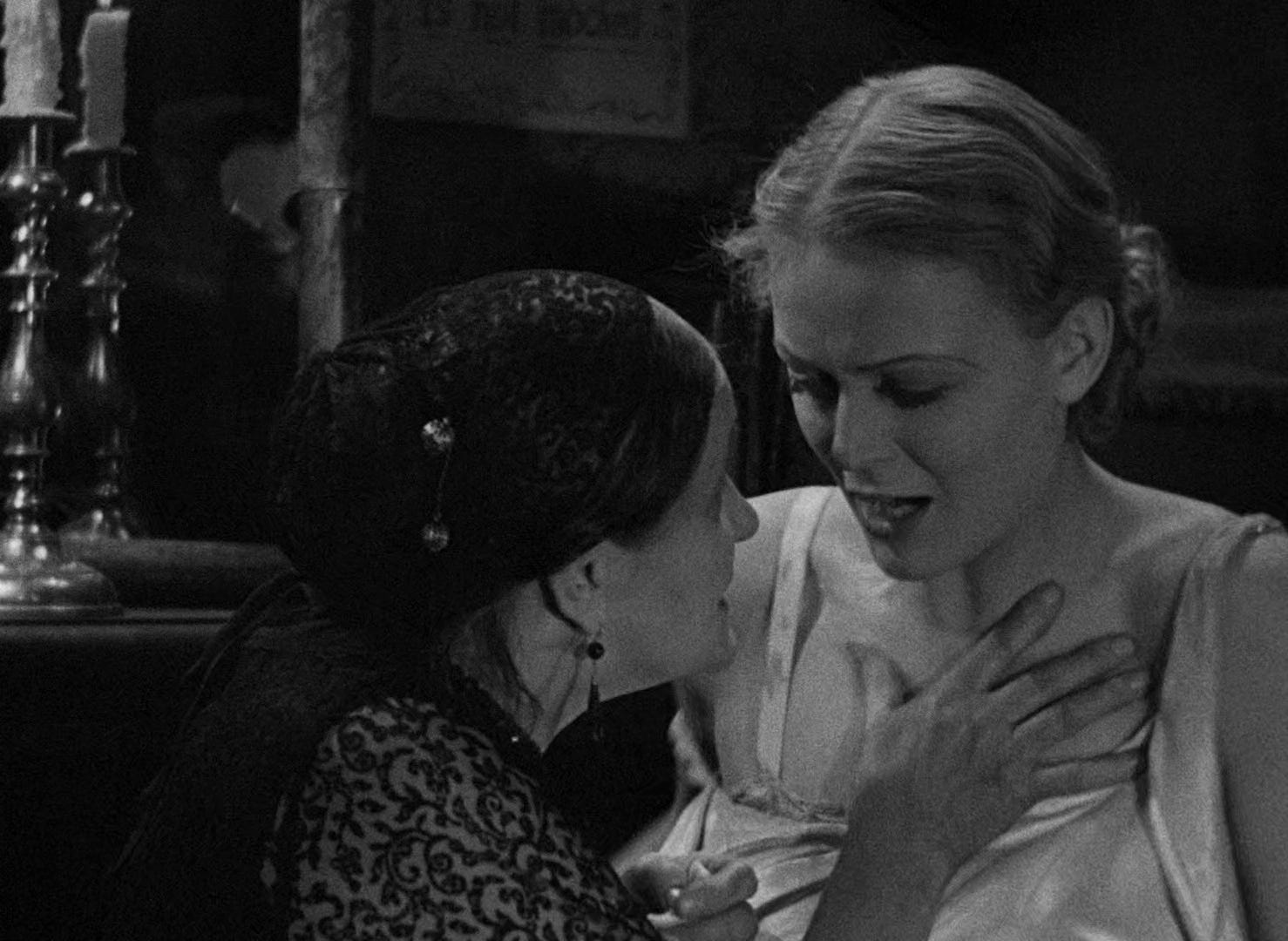
The Old Dark House has a number of interesting themes, including a false sense of safety, dysfunctional families, family secrets, mental illness, class divides and so on.
But the theme I want to focus on here, and I’m sure anyone who is familiar with this film knows what I’m about to say, is the queer subtext.
The Old Dark House is one of the first queer coded horror films ever made. There is so much to explore in this regard, but I can only touch on some of it here.
There are so many moments of homoerotic subtext, from the characters Horace and Rebecca Femm (old gay and lesbian siblings if ever I’ve seen them), to servant Morgan’s interactions with Horace and Saul, to the Femm family’s patriarch Sir Roderick being played by a woman, Elspeth Dudgeon (credited as John Dudgeon), to Margaret changing her clothes in Rebecca’s bedroom.
I also read that the film was an inspiration for The Rocky Horror Picture Show and now that I really think about it, that makes so much sense.
Themes (Harry)


The film hides hidden depths. If there are themes, they are secretive - furtive glances shared between suspicious characters. Madness bubbling away under the surface.
The original novel touches on post-war life in Britain, and explores interpersonal relationships and how stressful situations affect them. The film, though, is more preoccupied with the Femms - their strange behaviour and look, and their sinister brother shut away upstairs - the things that lurk in the dark. The whole thing is also a queer classic.
Acting/Characters (Jamie)


Every single actor gives a fantastic performance in this film. They truly are perfectly cast in their roles and I love every single one of them.
Boris Karloff as Morgan: Another non-speaking role for Karloff and he totally nails it. Karloff may have felt he didn’t have enough to do, but his menacing presence, especially after Morgan gets drunk, is essential to the film.
Melvyn Douglas as Penderel: Penderel is a charming guy and Douglas plays that really well. Plus, we get to see him fall in love, which is nice. It’s cool seeing him as a young man since the only other film of his I’ve seen is The Changeling.
Charles Laughton as Sir William Porterhouse: Porterhouse is loud and boisterous from the moment he enters the house. But then we get to know him a bit better. He misses his wife. He’s lonely and keeps Gladys around for company. He’s actually kind and forgiving. He steps up when others are in danger. He’s a good chap, or as Gladys says, he’s all right.
Lilian Bond as Gladys: Gladys DuCane, actually Perkins, is Porterhouse’s companion and a chorus girl. She’s smart, brassy and down-to-earth, and Penderel quickly develops feelings for her, which she returns. Bond plays her well.
Ernest Thesiger as Horace Femm: Horace is the first member of the Femm family we meet as the travellers arrive at the house and what an entrance he makes. He comes down the stairs, his effeminate nature already on full display, almost looking like a skeleton, and introduces himself. He then reveals himself to be cowardly, neurotic and eccentric, and Thesiger plays those traits beautifully.
Eva Moore as Rebecca Femm: Deaf-when-it-suits-her Rebecca is bitter, mean and obsessive. She’s deeply religious, yet leers over Margaret when she changes her clothes in front of her. Moore plays her to sinister, nasty perfection.
Raymond Massey as Philip Waverton: Philip is responsible for one of my favourite lines in the film: “I’ve never been in a better temper in my life!” while clearly pissed off and miserable as he tries to drive through the storm. Massey has perhaps the least interesting role in the film, but he still gives a really good performance.
Gloria Stuart as Margaret Waverton: Stuart plays Philip’s elegant and stylish wife Margaret nicely. She tells Penderel in the beginning of the film that she doesn’t frighten easily, but there is plenty to be afraid of in the Femm house, particularly Rebecca and Morgan’s fascination with her, and Stuart plays that fear just right.
Elspeth (John) Dudgeon as Sir Roderick Femm: Sir Roderick appears for just one scene in the film and what an appearance it is! Elspeth Dudgeon plays the Femm family patriarch so well that if it weren’t for her voice, I’d never have known it was a woman. An awesome gender-bending performance.
Brember Wills as Saul Femm: Wills is fantastic as the mad oldest brother of the Femm family and that’s all I can really say without spoiling too much.
Acting/Characters (Harry)


Heavy Spoilers in my sections, lads.
In many ways, the characters are what make the film. Let’s list:
Firstly we have Morgan - who is PERFECTLY cast. Karloff is supremely grim and strange, with his scarred face and gibbering. No notes - apart from how great his initial reveal is. His mourning of Saul and eventual suicide is surprisingly poignant.
Penderel is classy and amusing. He’s charming, but less obviously a burning-the-candle-at-both-ends type as he is in the novel. His flirting with Gladys is remarkably bold, though.
Sir William is excellently boisterous - a word me and Jamie both thought of separately, which really goes to show just how much he is. I’m not sure you’d want to be stuck with this bloke overnight. It’s hard to know what to think of him, but he is layered - a widower who built his way up to success.
Gladys Perkins is an instant cutie. She is a bit ridiculous at moments, and it highlights that she is younger than the others. She is a chorus girl, and is quite honest and real. Her romance with Penderel is easy to root for.
Horace Femm is stiff like a rod, and appropriately skeletal. His fear is brilliantly acted. Overall, he is hilarious - just constantly nervous. There is something of Orlando Watt in his character and I have to suspect this performance is a direct inspiration.
Rebecca Femm has a great voice, and great line delivery. She’s not half as mad-looking as she sounds in the book, but this works to her favour onscreen I feel. Her menace feels more intentional. She is a great needler, constantly bothering and judging her brother.
Philip is a bit of a non-entity for much of the film. He does do well fighting Morgan though, and he has a solid and dependable voice. I do like him, though.
Margaret is perfectly cast. Her nervousness and discomfort are visible immediately and don’t let up. You don’t get the same feeling of awkwardness between her and Philip as you do in the text though - this is replaced by a clearly strong and pleasant relationship. In the text, I believe Margaret and Philip are parents of a little girl. This adds an interesting layer to the overall proceedings.
Next, strange and giggly old Roderick, 102, who functions as a creepy figure of exposition. He is played by a woman, and it adds a wonderful bizarreness to the already weird atmosphere.
Finally, we have Saul, who wants to kill and destroy. Saul is just great - his manipulative, shrewd and mad look come together to make him a memorable villain, despite barely being in the film at all. His performance is everything it ought to be - unsettling, amusing, intense. His physicality is superb.
Direction (Jamie)
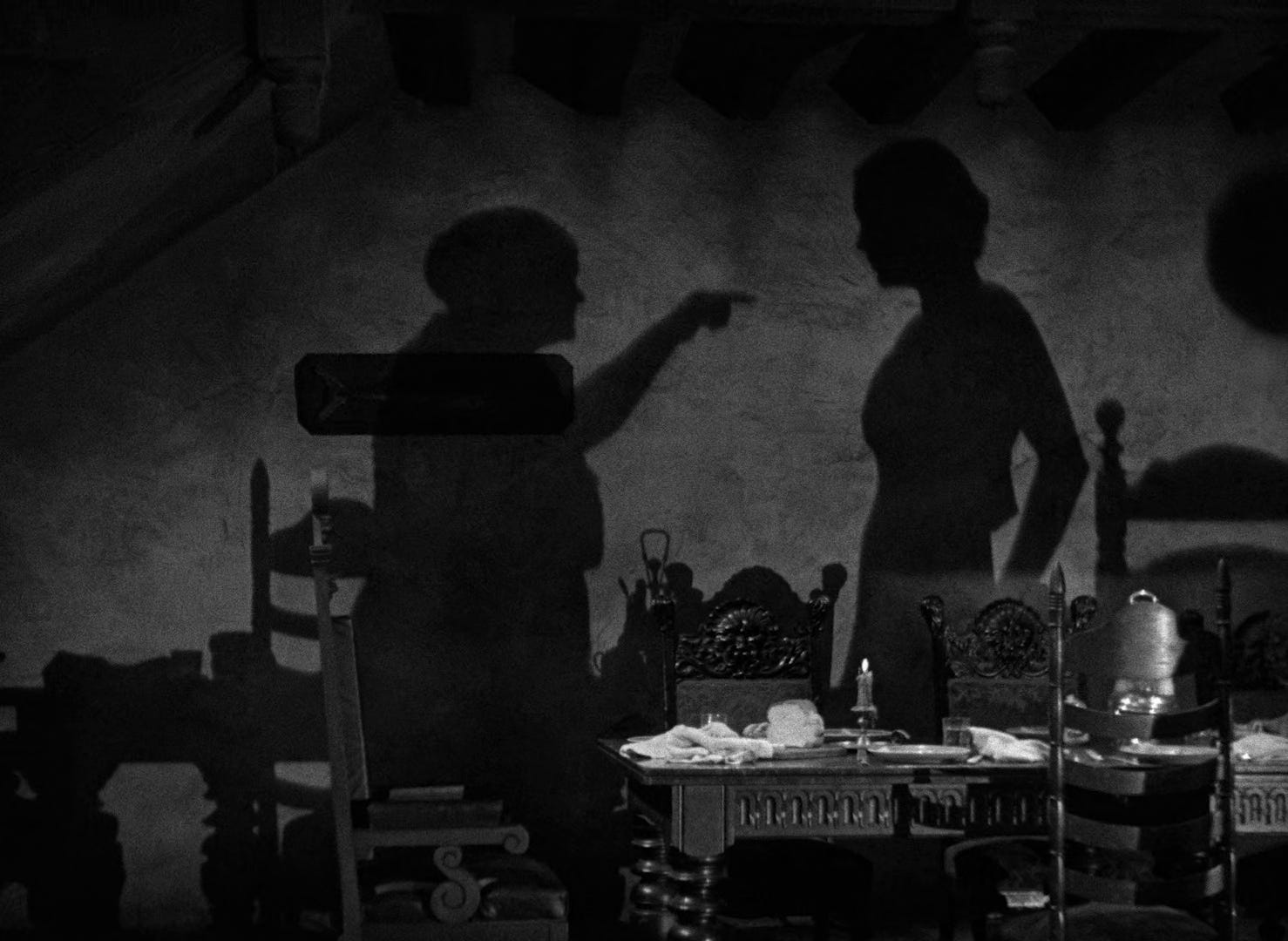
Going back to the theme of queer subtext for a moment, openly gay director James Whale gave the film tones of campiness and dark humour that another director simply couldn’t have.
In more general terms, similarly to Frankenstein, Whale took advantage of dark shadows, large sets and weather effects to create an atmosphere of claustrophobia and eeriness. But he also injected a ton of wit and style that elevates it from a creepy house film into something truly special.
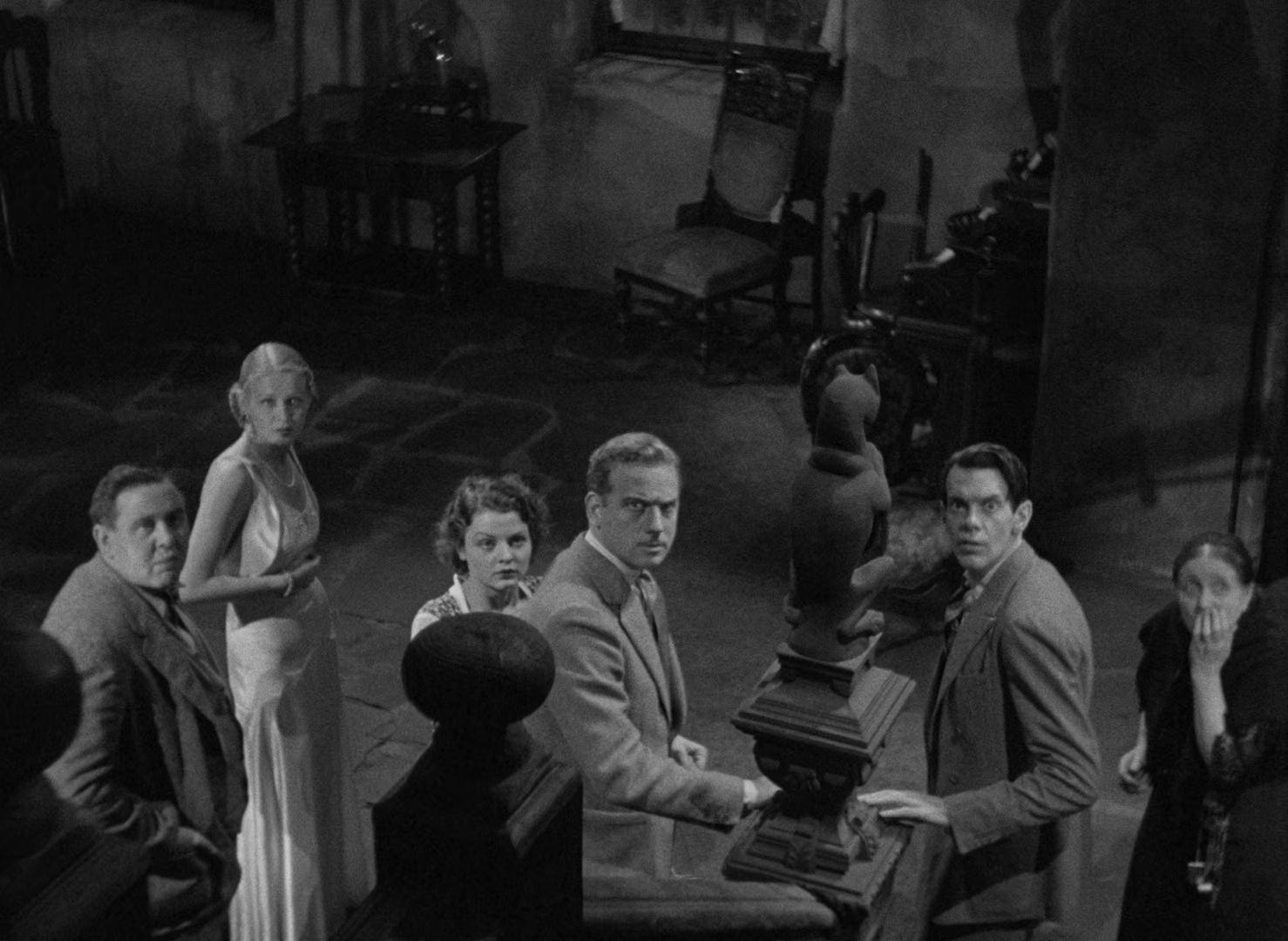
Thanks for joining us for Part 1 of our review of The Old Dark House! You can continue on to Part 2 right here!

 | A guest post by
|
Really interesting deep dive into this classic! I came to it after the (passable but imho funny )1963 remake - which is still worth a watch. Look forward to part 2.
Wonderful write up by both of you. The Old Dark House was one of those movies I saw as a kid and made a big impression on me. It's been along time since I have watched it